Uncategorized

Ruffles: The Heart Behind the Mission 🐾

Some heroes wear helmets. Some carry ropes.
And some… wag their entire body when they greet you.

Meet Ruffles, a beloved member of Seattle Mountain Rescue whose impact goes far beyond the mountains. Born on January 25, 2021, Ruffles has grown into a unique and powerful presence—one that brings comfort, connection, and joy wherever she goes.

A Calling Rooted in Compassion

Ruffles’ journey began with a love for people—especially kids. She started her career with Reading With Rover, where she helped young readers build confidence simply by being a calm, nonjudgmental listener.

There’s something special about a dog who listens without interrupting, without correcting—just quietly encouraging. Ruffles not only embraced this role, she now helps mentor other dogs learning to do the same, spreading her gentle influence even further.

A Natural Fit for Seattle Mountain Rescue

Since early 2021, Ruffles has been raised alongside the team at Seattle Mountain Rescue, growing up immersed in a culture of service, resilience, and care for others.

While SMR responders train thousands of hours in technical rescue, navigation, and medical care, Ruffles represents another essential piece of the mission: emotional support.

In moments of uncertainty—whether waiting for news, processing a difficult outcome, or simply catching a breath after a long mission—Ruffles is there.

No commands needed. Just presence.

Certified to Comfort in Times of Crisis

In 2023, Ruffles took her role even further by becoming a certified crisis response canine with HOPE Animal-Assisted Crisis Response.

This certification means she is trained to respond in high-stress environments—supporting individuals, families, and even first responders during times of trauma, grief, or disaster. Her work has extended beyond local missions, with deployments on a national level when called.

Because sometimes, the most powerful form of help isn’t technical—it’s emotional.

Not All Work… Plenty of Play

Of course, Ruffles isn’t all business.

When she’s not supporting missions or lending comfort, you’ll likely find her:

  • Running through the trails and forests of the Snoqualmie Valley
  • Exploring the beauty of the San Juan Islands
  • Diving enthusiastically into any body of water she can find

She hasn’t met a lake, river, or shoreline she doesn’t love.

And if you’ve ever met her, you know this to be true:
Ruffles doesn’t just wag her tail—her whole body wags.

More Than a Dog

Ruffles reminds us that rescue isn’t only about reaching people in the mountains—it’s about caring for them, and for each other, every step of the way.

She brings smiles in hard moments.
She builds connection when words fall short.
She shows us that strength can be soft, and that comfort can be powerful.

In a world that often feels heavy, Ruffles is a living reminder of something simple and profound:

Kindness matters. Presence matters. And sometimes, healing begins with a wag. 🐶💛

If you’d like to support programs like Ruffles’ and the work of Seattle Mountain Rescue, consider making a donation or learning more about how you can get involved.  SMR now offers several tax-smart giving options. Consider a gift of stocks, donor advised funds (DAFs) or qualified charitable distributions (QCDs).

New Technology in Search and Rescue

How Cutting‑Edge Technology Is Improving SMR’s Ability to Save Lives

Search and rescue in the Pacific Northwest is shaped by the landscape itself. Thick forests limit visibility, rugged mountains slow travel, and weather can shift from calm to hazardous in minutes. These conditions demand speed, adaptability, and clear coordination—qualities that become harder to maintain the farther teams move from roads and cell coverage.

That’s why Seattle Mountain Rescue (SMR) is investing in technologies that help us overcome these natural barriers. From drones that search large areas quickly, to satellite tools that keep teams connected, to e‑mountain bikes and exoskeletons that improve mobility, to AI systems that help manage complex missions. Each innovation strengthens our ability to respond when someone needs help. These tools are becoming essential parts of modern SAR operations, and we’re actively evaluating and adopting them as they become available.


Drones

Drones now play three primary roles in search and rescue: search, support, and awareness.

Search

Modern drones can autonomously fly complex grid patterns over mountainous terrain while using thermal imaging, optical zoom, and AI-assisted detection.

What once took hours—or even days—can now take minutes. Subtle movement, color anomalies, or heat signatures that might be missed by the human eye can be identified quickly from the air.

Support

Drone lifting a litter

Drone with Rescue Litter

Drones can deliver critical equipment to precise locations in a fraction of the time it would take a ground team. Smaller drones can carry essential items such as radios, flashlights, or medical supplies like EpiPens and AEDs.

Larger platforms are available that can transport significantly heavier gear—such as ropes, litters, or advanced medical kits—directly to a scene. As a volunteer nonprofit organization, acquiring this type of equipment remains a challenge, but it represents a major opportunity to improve response capability.

Awareness

Drones provide real-time video to teams in the field and personnel at base. This improves decision-making and safety.

Examples include:

  • Assessing rockfall or avalanche risk above a rescue scene
  • Lighting a medical scene or difficult terrain during night operations
  • Providing a broader operational view for coordination

One area of drone research is swarming or having multiple drones working together to dramatically reduce search time – cutting hours down to minutes. 

At the same time, AI-powered image and video analysis is rapidly improving. A great example being Eagle Eyes Search. Drones are increasingly able to detect subjects in real time – oftentimes identifying things a human pilot would miss, and broadcast real-time mission updates to all of the rescue teams.


Satellite Connectivity

Reliable communication is critical in the environments where we operate.

With satellite connectivity, Seattle Mountain Rescue can maintain data and communication links even in remote areas with no cell coverage. This enables:

  • Live video consultation with medical personnel
  • Real-time updates between field teams and Base
  • Continuous data sharing during extended missions
  • Portable Starlink connection for wifi connectivity in remote locations

Many cell phones now support satellite communication allowing position updates for rescue members in the back country, and messaging when outside traditional cell coverage.


Map Sharing & Real‑Time Coordination

SarTopo

Modern search and rescue depends on accurate, shared mapping—especially in the complex terrain of the Pacific Northwest. SMR uses Caltopo as our primary mapping platform to keep teams aligned, informed, and safe throughout a mission. It allows us to mark command post locations, track subjects, and visualize terrain in ways that support faster, clearer decision‑making.

One of the most powerful capabilities we now rely on is the ability for 911 to capture a subject’s cell‑phone coordinates in seconds. Once those coordinates are received, they can be dropped directly onto our SarTopo mission map and shared instantly with every team in the field. This gives rescuers a precise point—often the difference between hours of searching and a rapid, targeted response.

SarTopo also enables real‑time tracking of ground teams, helicopters, and drones, giving mission leaders a live operational picture as conditions evolve. When new information comes in, every rescuer sees the same updated map, ensuring that teams converge quickly and efficiently. This shared mapping environment has become one of the most important tools in modern SAR operations.


E-Bikes

E‑mountain bikes are becoming an increasingly valuable mobility tool across modern SAR operations, giving teams new ways to move quickly and extend their reach. They allow rescuers to cover large distances quickly, transport gear more efficiently, and access non‑technical terrain far faster than traveling on foot. 

They’re especially effective on trail systems and in urban searches where speed and mobility directly improve response times. As battery technology and cargo‑carrying options continue to advance, e‑mountain bikes are opening new possibilities for rapid deployment and early‑stage search coverage.

Thanks to the partnership with The Line Bike Experience, SMR was generously donated an initial fleet of unit bikes to make available for member use. 


Exoskeletons

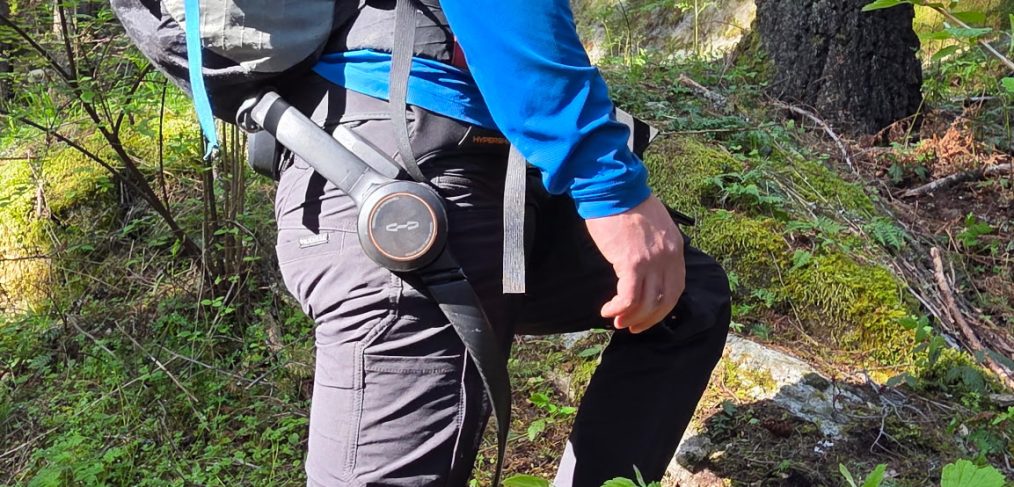
Powered exoskeletons are an emerging technology with real potential for search and rescue. These systems use lightweight power‑assist mechanisms and AI‑driven motion control to help rescuers move more efficiently on foot, carry heavier loads, and reduce fatigue on long approaches.

SMR is currently partnering with Hypershell to evaluate the Hypershell X exoskeleton device to understand how it performs in steep, brushy, or snowy terrain where other tools—like e‑mountain bikes—can’t go. Initial field use is giving us a clearer picture of where this technology can fit into our overall response toolkit. 


AI‑Driven Mission Support 

Search and rescue operations are complex, involving multiple teams, tools, and agencies working simultaneously. 

AI-driven software we’re currently working on (LOLA) is aimed to help us improve coordination and efficiency by:

  • Processing initial dispatch information
  • Assisting with mission planning
  • Managing operational complexity in real time

As these technologies evolve, we’re evaluating how they can help teams stay ahead of changing conditions and operate with greater clarity in the field. Our current agent project is called LOLA, which will help us improve communications with the sheriffs dept when a mission begins.


A Volunteer Team Powered by Technology

Seattle Mountain Rescue is a 100% volunteer organization. Every mission is supported by individuals who dedicate their time, training, and expertise to helping others in difficult situations.

Technology is not a replacement for that commitment—it’s a force multiplier.

It allows us to respond faster, operate more safely, and make better decisions in the field. As these tools continue to evolve, they will play an even greater role in helping us carry out our mission.

SMR now offers several tax-smart giving options. Consider a gift of stocks, donor advised funds (DAFs) or qualified charitable distributions (QCDs).  If you’re interested in supporting Seattle Mountain Rescue, your contribution would help bring these and other tools into the field—and ultimately, helps us save lives – www.seattlemountainrescue.org/donate
Shared Roots to Shared Missions

From Shared Roots to Shared Missions: The Mountaineers & Seattle Mountain Rescue

Long before high-tech gear and rapid-response systems, mountain safety in the Pacific Northwest was built on something far more powerful: collaboration.

When Seattle Mountain Rescue (SMR) was formally organized in 1948 as the Mountain Rescue Council, it wasn’t created in isolation. It was born out of a partnership between The Mountaineers, the Washington Alpine Club, and the National Ski Patrol—groups united by a shared commitment to safety in the mountains. Together, they formed a specialized rescue team designed to respond when adventure took an unexpected turn.

Among those early visionaries was Wolf Bauer, a Mountaineers member who helped lead the effort, alongside Omi Daiber—often referred to as the “Father of Mountain Rescue.” Their legacy lives on not only in the structure of SMR today, but in the enduring partnership between our organizations.

Then and Now: A Partnership That Endures

That spirit of collaboration hasn’t faded—it’s evolved.

Today, Seattle Mountain Rescue continues to work closely with The Mountaineers to promote safety, education, and preparedness in the outdoors. Whether through joint trainings, shared community outreach, or storytelling that reaches thousands, our missions remain deeply aligned.

A recent example is the The Seattle Times article, “Hiking WA’s backcountry during spring? Here’s how to safely do it.” In it, we come together to share timely, practical guidance for navigating Washington’s unpredictable spring conditions—when sunshine at the trailhead can quickly give way to snow, ice, and risk at higher elevations.

Spring in the Mountains: Beauty Meets Responsibility

Spring has officially arrived. Wildflowers are beginning to bloom, trails are calling, and longer days invite us back into the mountains.

But here’s the truth: spring hiking in Washington is anything but predictable.

Snow still blankets higher elevations. Melting conditions create slick, unstable terrain. River crossings swell. And what starts as a casual hike can quickly become a serious situation without the right preparation and situational awareness.

This is where education—and partnership—matters most. Together we encourage every outdoor enthusiast to:

  • Check conditions before heading out
  • Carry appropriate gear for snow travel
  • Understand changing weather patterns
  • Know your limits—and turn around when needed

Because while the mountains are beautiful, they are also indifferent.

“The Mountains Don’t Care… But We Do.”

It’s a phrase that captures the reality of the wilderness—and the heart of what we do.

The mountains don’t adjust for experience level, timing, or intention. But the people who serve in mountain rescue do. Every mission, every training, every article shared with the public is driven by a single purpose:

To make sure that everyone comes home from the backcountry.

That mission has connected Seattle Mountain Rescue and The Mountaineers since the very beginning—and continues to guide us today.

Support the Mission

Seattle Mountain Rescue is an all-volunteer organization. Every mission we respond to, every hour we train, and every life we help bring home is made possible through the generosity of our community.

We rely solely on donations and grants to sustain our operations, invest in lifesaving equipment, and continue advancing the skills and technology that make our work possible.

Support Seattle Mountain Rescue today. 🏔️  Because no matter how far you go, or how high you climb— we’re here to help bring you home. 🏔️

Understanding Search & Rescue in King County

How Search & Rescue Works in King County — And Where Your Support Makes an Impact

Search and Rescue (SAR) in King County is a coordinated network of independent volunteer organizations that respond under the authority of the King County Sheriff’s Office.

You may hear both the individual SAR units and the King County Search and Rescue Association (KCSARA) mentioned when a mission makes the news. While they may work together on missions they serve different roles within the system.

Understanding how the entire system works — including the role of local fire departments — can help you decide where to volunteer or direct your support.

Regardless of what team or teams are required for a rescue, the county dispatch center receives the 911 call and assembles the right parties.

How 911 Calls Become Rescue Responses

When someone calls 911 for a wilderness or trail emergency, the call is routed through the county dispatch center.

If the incident involves a medical issue, both the appropriate local fire department and the King County Sheriff’s SAR Deputy are notified.

Fire personnel and the Sheriff’s SAR Deputy work together to determine what resources are most appropriate for the situation.

Depending on the subject’s condition, terrain, and location:

  • The fire department may handle the incident independently.
  • SAR units may be deployed.
  • Or both fire and SAR may respond together.

Fire departments are often able to respond more quickly, particularly when the subject is close to a trailhead or roadway. In these situations, fire crews frequently handle medical-only or short-distance evacuations.

When terrain becomes technical, access becomes difficult, or the subject is deep in the backcountry, SAR units are more likely to be deployed to provide specialized wilderness and technical rescue capabilities.

This collaborative decision-making ensures the right resources are sent — balancing speed, medical care, terrain expertise, and technical capability.

The Role of the SAR Units

The operational SAR units are independent 501(c)(3) nonprofit organizations that deploy into the field when requested by the King County Sheriff’s Office, based upon the need of each mission.

There are seven individual and unique all volunteer SAR units:

Mission: A  team focused on providing transportation and logistical support in terrain that conventional vehicles can’t reach. 4×4 SAR aids other SAR units by transporting people, equipment, and supplies, supporting night road searches, traffic control, and radio relay operations.

Mission: Dedicated to saving lives through search and rescue activities in King County and Washington State, ESAR provides wilderness and technical ground search capabilities and offers continuous wilderness and leadership training for its youth and adult members.

Mission: Provides highly trained volunteer support in incident planning, logistics, documentation, communications, and administration for SAR missions and large events under the Incident Command System.

Mission: Specialists in mobile search and rescue using all-terrain vehicles, snowmobiles, or dual-sport motorcycles to access areas that even 4×4 vehicles cannot access. RSVU assists in remote searches, subject transport, and brings SAR teams and gear into hard-to-reach terrain.

Mission: To find and aid people in distress and assist law enforcement with evidence searches through specialized canine search disciplines, including air scent, trailing, and human remains detection.

Mission: A team of experienced alpinists dedicated to saving lives through search, rescue, and mountain safety education in steep, mountainous, and hazardous terrain throughout Washington. SMR specializes in supporting missions within technical backcountry terrain, searches any time of the year, so that everyone comes home from the backcountry.

Mission: A team of backcountry volunteer ski patrollers dedicated to helping people and saving lives by providing emergency medical/trauma care, avalanche safety and rescue, and wilderness mountain travel support year-round.

Each organization brings specialized skills and training to the field. Together, these units form a comprehensive volunteer response system serving King County.

And importantly, there is no cost to the person being rescued, made possible by community support and donors like you.  By supporting Seattle Mountain Rescue, you’re not just funding rescue operations — you’re helping save lives and bring loved ones home.

Learn more or donate today at www.seattlemountainrescue.org

When Things Go Wrong in the Backcountry

WTA Highlights Seattle Mountain Rescue: When Things Go Wrong in the Backcountry

Outdoor recreation in Washington is thriving. Every year, more people discover the joy of hiking, climbing, skiing and exploring the incredible landscapes that surround the Puget Sound. But as anyone who spends time in the mountains knows, even a well-planned adventure can take an unexpected turn.

That’s why we were honored to be featured recently by the Washington Trails Association in their article:
“Seattle Mountain Rescue Is There to Help When Things Go Wrong.”

👉 Read the full article here:
https://www.wta.org/news/magazine/features/seattle-mountain-rescue-is-there-to-help-when-things-go-wrong

A Community Effort to Keep People Safe

The Washington Trails Association works every day to maintain trails, advocate for public lands, and help people enjoy the outdoors safely. But when incidents happen in remote terrain, specialized search and rescue teams step in. Seattle Mountain Rescue is one of those teams, providing volunteer technical search and rescue services throughout the region. 

Founded in 1948, Seattle Mountain Rescue is an all-volunteer nonprofit organization dedicated to saving lives through search and rescue operations and mountain safety education. The team responds to a wide range of missions—from searching for lost hikers to performing complex evacuations in steep or remote terrain. 

And importantly, there is no cost to the person being rescued, made possible by community support and donors like you.  By supporting Seattle Mountain Rescue, you’re not just funding rescue operations — you’re helping save lives and bring loved ones home.

Learn more or donate today at www.seattlemountainrescue.org

Seattle Mountain Rescue: Everyone Comes Home

Outdoor recreation in Washington state continues to grow, drawing residents and visitors of all ages into our mountains, forests, and waterways. With more people exploring wild places than ever before, the need for skilled backcountry rescue has never been greater.

No one sets out on an adventure expecting it to go wrong. Yet nearly every experienced outdoor enthusiast can recall a moment when an unforeseen accident, rapidly changing weather, or a simple misstep could have turned serious. Emergencies often arise from a combination of factors — some completely beyond our control. That’s when Seattle Mountain Rescue (SMR) is called into action.

When things go wrong — when daylight fades, weather turns, or an injury strikes — a call or text to 911 can set in motion one of the Pacific Northwest’s most capable rescue responses. The King County Sheriff’s Office can deploy SMR within minutes to help bring people home safely — with no charge for services.


Who We Are
Seattle Mountain Rescue is an independent 501(c)(3) nonprofit organization under Mountain Rescue Council. We are run by dedicated, highly trained volunteers who respond under the authority of the King County Sheriff’s Office and collaborate with other units through our association memberships with MRA (Mountain Rescue Association) and KCSARA (King County Search and Rescue Association). We do not charge for our services.
Founded in 1948, SMR is one of the oldest volunteer mountain rescue teams in the United States and a trusted partner in the region’s emergency response system.


A Vital, 24/7 Lifeline in the Backcountry
Seattle Mountain Rescue responds to more than 100 missions every year, in every season, at any hour, and across some of the most rugged and remote terrain in the region. Whether it’s a hiker stranded on a cliffside, a backpacker injured on a steep trail, a skier hurt deep in the backcountry, or a climber caught in a sudden storm, one thing remains constant:
Our mission — Everyone comes home from the backcountry.


Training, Skill, and Commitment
SMR is a 100% volunteer organization made up of experienced alpinists, search specialists, medical professionals, communications experts, and support volunteers. These individuals donate countless hours both on missions and in preparation.
Each year, SMR volunteers collectively invest thousands of hours in training — honing advanced rope and rigging techniques, wilderness medicine, navigation, communications, and physical conditioning. This deep commitment to preparation, teamwork, and safety makes SMR one of the most capable and experienced volunteer mountain rescue teams in the nation.


Beyond Rescue: Safety Through Education
SMR believes the best rescue is the one that never has to happen. We are deeply committed to outdoor safety education, helping outdoor enthusiasts make informed decisions before they ever need to call for help. From trip planning and weather awareness to backcountry risk management, our outreach helps strengthen the entire outdoor community.


Our Funding, Your Support
As a nonprofit, all-volunteer organization, SMR depends on community support to remain ready, equipped, and trained for every mission. For every $1.00 donated, 85¢ goes directly to program expenses — keeping rescuers prepared with the gear, training, and technology needed to respond safely and effectively, no matter the conditions.


We Need Your Support
By supporting Seattle Mountain Rescue, you’re not just funding rescue operations — you’re helping save lives and bring loved ones home.
Learn more or donate today at www.seattlemountainrescue.org
We gratefully accept:
Cash and checks
Donor Advised Fund (DAF) contributions
Appreciated stocks
Estate plan gifts
Every contribution sustains our mission of saving lives so that “Everyone comes home from the backcountry.” Make a donation now.

When Things Go Wrong

Seattle Mountain Rescue volunteers have been helping hikers and other people who love the outdoors for decades.

WTA works every day to get people out on trail. We build and maintain trails, advocate for making them more accessible and create resources to help hikers to stay safe. But WTA can’t do it all – it takes a wide range of groups to care for the outdoors and the people who love being outside. And sometimes, things do go wrong. When they do, it’s nice to know that search and rescue organizations are there to help.

Seattle Mountain Rescue (SMR) is one of those groups that can help hikers or other outdoor recreationists when something goes wrong. Their motto: “Everybody comes home from the backcountry.”

Read the complete article from Washington Trails Association staff writer Tiffany Chou

Cut from the Same Stone

At SMR, we love climbing mountains. From peaks here in the Pacific Northwest, to summits across the globe, our entirely-volunteer search and rescue team loves a good challenge with a view. We’re mountain climbers at heart and we’ve got the record to show it. Check out where we’ve been, how high we’ve climbed and some of our expertise both on and off the mountains—including our day jobs!

SMR is an entirely volunteer and donation-based technical search and rescue team. For those interested in supporting financially please go to check out our donation page or visit us on Facebook at Seattle Mountain Rescue.

smr_climbing_resume_2016