Evaluating Hypershell Exoskeleton Technology for Backcountry Rescue
For more than 75 years, Seattle Mountain Rescue (SMR) has responded to emergencies in the mountains of the Pacific Northwest using strong rescue fundamentals: medical care, rope systems, terrain management, navigation, communication, and highly trained volunteers who keep moving long after most people turn back.
As outdoor recreation continues to grow across Washington State, so does the complexity and frequency of rescue missions. Seattle Mountain Rescue is continuing to evaluate how emerging technology may help volunteers respond more safely and effectively in difficult terrain.
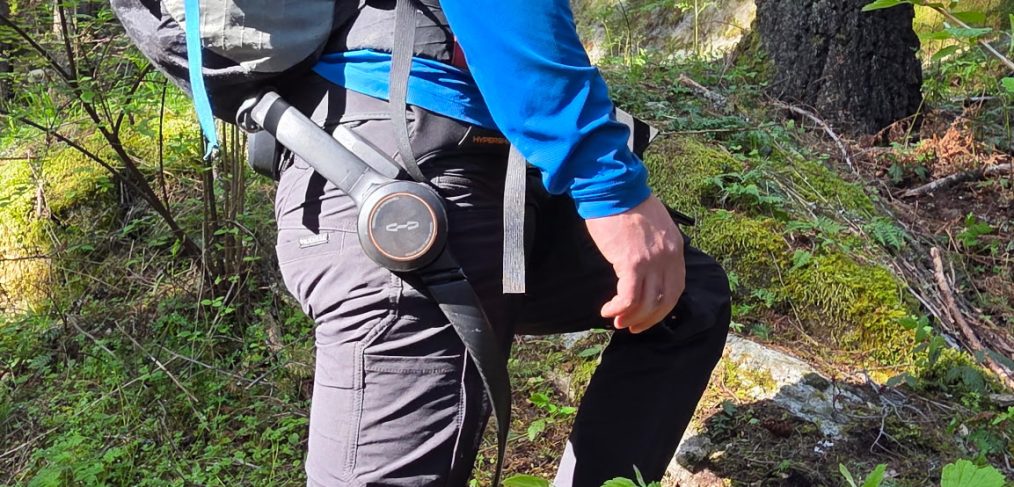
This spring, SMR began testing the Hypershell X Ultra powered exoskeleton as part of a structured field evaluation program. The Hypershell X Ultra is a lightweight powered hip exoskeleton designed to assist movement during steep climbs, long approaches, and heavy load carries. Using sensors and real-time gait analysis, the system adds mechanical assistance during the most physically demanding parts of a stride, particularly while traveling uphill and carrying heavy equipment.
The goal of the exoskeleton evaluation is straightforward: determine whether this technology can meaningfully improve safety, efficiency, and operational capability during mountain rescue missions. Throughout the testing period, SMR volunteers are using the exoskeletons in a variety of real-world conditions, including:
- Steep trail ascents and descents
- Long approaches carrying rescue equipment
- Winter travel and layered clothing systems
- Mixed-terrain movement
- Inclement weather conditions
- Potential subject-assisted mobility scenarios
Potential benefits include reducing rescuer fatigue on long approaches, helping teams move gear more efficiently, and ultimately reaching ill, injured, or lost subjects sooner. If the technology proves reliable in real mountain conditions, it could meaningfully improve outcomes by supporting clearer decision‑making, sustaining performance over demanding terrain, and maintaining operational momentum during multi‑hour evacuations.
This week, KING 5 News joined SMR volunteers to learn more about the testing program and how emerging outdoor technology may support future rescue operations. Watch the story here:
Seattle Mountain Rescue deploys exoskeletons as second U.S. SAR team to use the technology
These systems are not intended to replace rescuers or traditional search and rescue skills. SMR volunteers continue to rely on training, teamwork, and technical proficiency in challenging terrain and changing mountain conditions.
SMR’s approach to technology remains mission-focused. Tools are evaluated based on whether they improve rescuer safety, operational effectiveness, and response capability in the field. Existing technologies already used by the team include drones, e-bikes, satellite communications, shared digital mapping platforms, and AI-based planning and analysis tools. Technology is simply a tool that empowers rescuers to move more efficiently, more effectively, and more safely with the goal of providing life-saving services to the outdoor community.
To learn more about other technologies Seattle Mountain Rescue is evaluating and using in the field, visit: New Technology in Search and Rescue
Community support helps Seattle Mountain Rescue maintain the training, equipment, and readiness needed to respond when people need help in the mountains.
If you’re interested in supporting SMR, your contribution helps volunteers evaluate emerging technology, maintain operational readiness, and bring critical tools into the field when every minute matters. SMR now offers several tax-smart giving options. Consider a gift of stocks, donor advised funds (DAFs) or qualified charitable distributions (QCDs). Support Seattle Mountain Rescue